

Pharmaceutical Packaging Printing: Regulations, quality control, and inspection best practices
Written by Roni Bracha , 16 Nov 2026
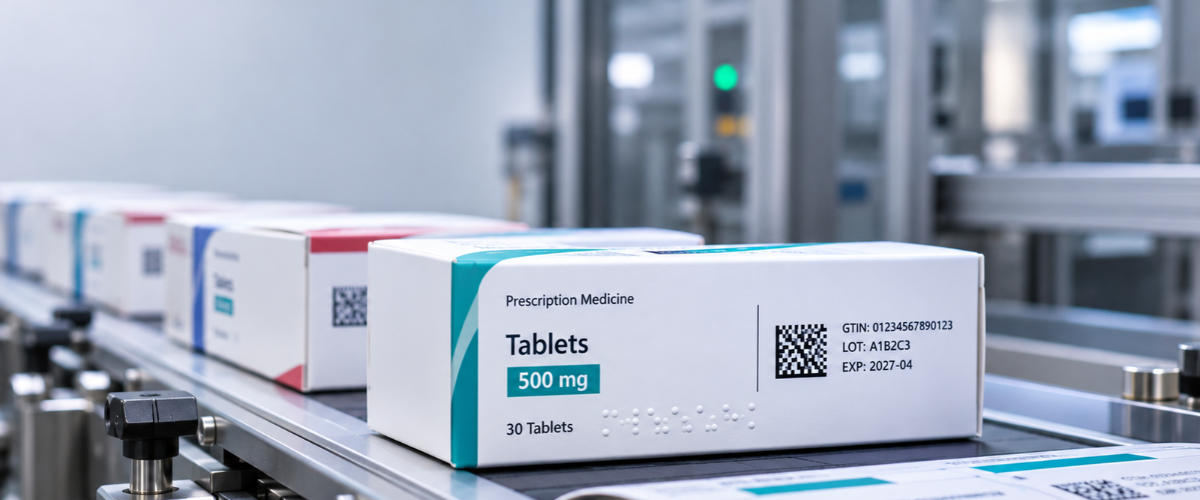
Pharmaceutical packaging plays a critical role in patient safety and regulatory compliance. Printing errors, such as missing text, incorrect dosage information, unreadable barcodes, or color inconsistencies, can lead to costly recalls, production delays, and potential patient harm.
This article explores key pharmaceutical packaging regulations, the printing challenges they create for printers and converters, and how effective quality control and automated print inspection can help prevent errors and support compliance.
Why regulatory compliance matters in pharma packaging
Packaging is often a patient’s last line of defense against a medication error. Illegible dosage instructions, missing warnings, or an incorrect allergen notice can lead directly to harm. Because of this, regulators around the world treat packaging and labeling as a core part of drug safety, not a cosmetic afterthought.
Non-compliance carries real consequences:
- Patient safety risk: misreading a dosage, missing a contraindication, or confusing two similarly named drugs can cause serious harm.
- Legal and financial liability: manufacturers, brand owners, and even the printing or packaging supplier can be held responsible for labeling defects.
- Supply chain disruption: packaging that doesn’t meet a destination market’s requirements can be held at customs, delayed, or rejected entirely.
- Reputational damage: a public recall tied to a packaging error erodes trust in a brand far beyond the cost of the recall itself.
Printing and labeling errors are recognized causes of pharmaceutical recalls, highlighting the importance of effective quality control throughout packaging production.
Key regulatory bodies and frameworks
Pharmaceutical packaging must comply with regulations that vary by market. Key frameworks include:
- United States: FDA requirements under 21 CFR Parts 201 and 211 govern drug labeling and relevant packaging operations. The Drug Supply Chain Security Act (DSCSA) establishes additional traceability requirements.
- European Union: The Falsified Medicines Directive (FMD), applicable EU medicines legislation, and GMP guidelines address packaging identification, safety features, labeling, and production controls.
- International standards: ISO 15378 addresses quality management for primary pharmaceutical packaging materials, while GS1 standards support standardized product identification and barcode data structures.
Packaging artwork must therefore be reviewed against the specific requirements of each destination market.
Regulatory requirements define what pharmaceutical packaging must communicate and how it must be presented. For printers and converters, the challenge is ensuring that the approved design is reproduced accurately and consistently throughout production. This requires effective print quality control, from prepress verification to inspection of the finished printed output.
Core printing requirements for pharmaceutical packaging
While requirements vary by region, most regulatory frameworks converge on a few core printing requirements.
Mandatory label content
At minimum, packaging typically must display the drug name (brand and generic/INN), active ingredient(s) and strength, dosage form and administration instructions, lot/batch number, expiration date, manufacturer or distributor information, and required warnings or contraindications.
Legibility and font standards
Regulators increasingly specify minimum font sizes, contrast ratios between text and background, and readability standards to ensure information can be read by patients, including those with visual impairment. The EU, for example, requires Braille on outer cartons for most medicinal products.
Serialization and traceability
Under frameworks like the DSCSA and FMD, packaging must carry unique product identifiers, typically encoded in 2D DataMatrix barcodes, that allow the product to be tracked through the supply chain and verified as authentic at the point of dispensing. Tamper-evident features are also commonly mandated to detect package interference.
Color-coding and look-alike/sound-alike (LASA) mitigation
Similar drug names and packaging designs can contribute to medication errors. Differentiated typography, appropriate use of color, and Tall Man lettering are among the strategies used to help distinguish products. However, color should not be relied upon as the sole means of identifying or differentiating medications.
Even when packaging artwork has been approved, printing defects can occur during production. Manual and sample-based quality checks may miss intermittent defects such as missing characters, print contamination, or unreadable barcodes. Automated 100% print inspection helps detect these deviations throughout production, while artwork verification and data validation processes address errors in the approved content itself.
Common mistakes in pharma packaging printing (and how to prevent them)
Packaging-related quality problems often involve recurring errors that can be addressed through effective preventive controls.
- Inconsistent or Outdated Artwork Versions Printing an old version of approved artwork, often because multiple file versions circulated during revisions, is one of the most common root causes of packaging recalls. Prevention: Implement a centralized digital asset management (DAM) or artwork management system with strict version control and a single source of truth for approved files.
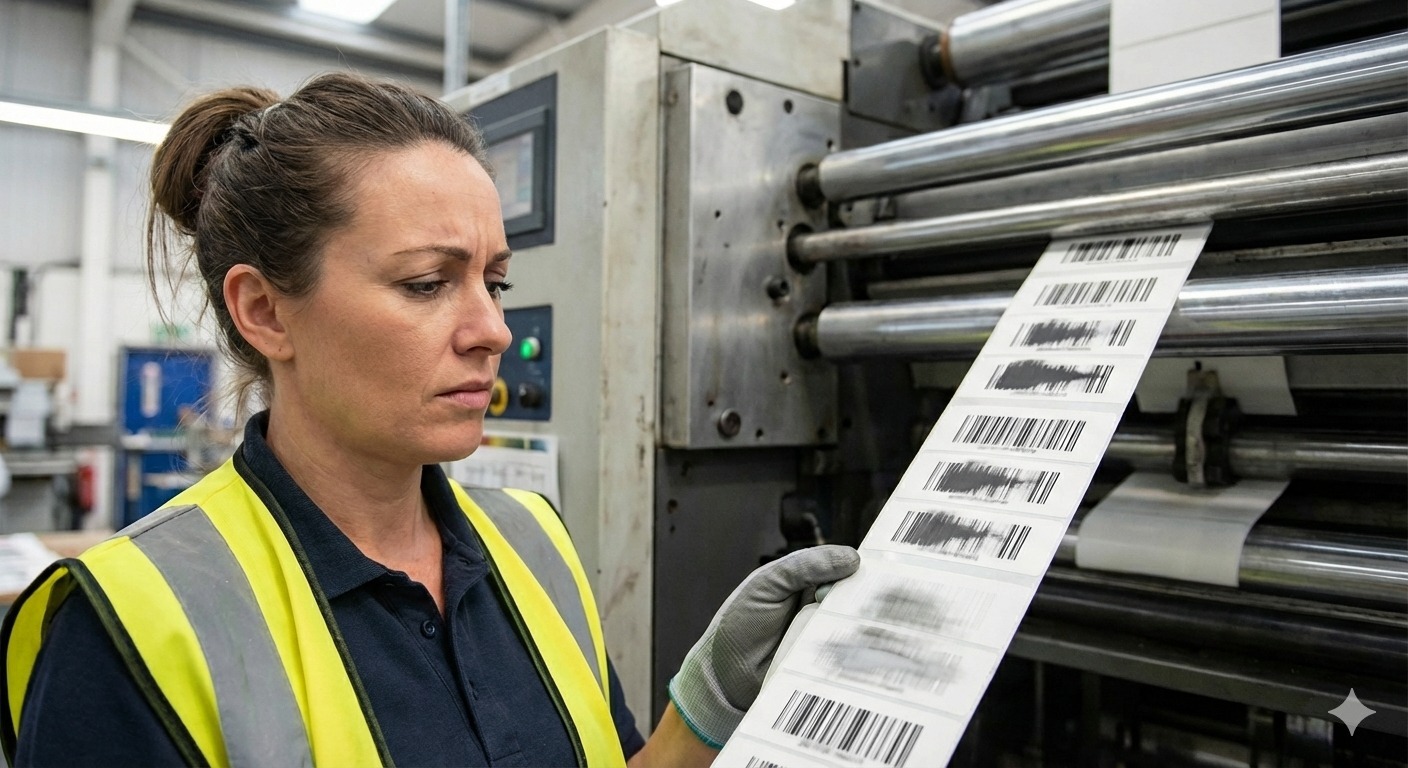
- Barcode and Serialization Errors A barcode that fails to scan, encodes the wrong data, or doesn’t meet GS1 formatting standards can block a product from moving through the supply chain, or worse, pass through undetected with incorrect data. Prevention: Use appropriate barcode inspection and verification tools to detect printing defects, confirm encoded data against approved information, and assess barcode quality where required. Formal barcode grading should be performed using equipment designed for that purpose.
- Color Variation Between Print Runs Inconsistent printing conditions can cause color deviations within a production run or between batches. These variations may affect brand consistency and make it more difficult to distinguish packaging designs that rely on color differentiation. Prevention: Implement standardized color management procedures and use calibrated spectral measurement tools to monitor color consistency against approved targets.
- Font, Text, and Translation Errors Small text errors, such as a misplaced decimal in a dosage, a mistranslated warning, or a font substitution that alters character legibility, can have outsized consequences. Prevention: Build multilingual proofreading and back-translation checks into the approval workflow, and lock font files to prevent unintended substitutions during file handoffs.
- Regulatory Text Omissions Missing warnings, omitted storage instructions, or incorrect units of measurement can result in labeling non-compliance and potentially serious patient safety risks.
- Prevention: Require a formal regulatory checklist sign-off, reviewed against the current market-specific requirements, before any artwork is released to print.
Quality control and validation processes
Strong quality control closes the gap between a compliant design and a compliant finished product:
- Pre-press proofing and digital approval workflows ensure that only the final, approved version of artwork reaches the printing press.
- In-line vision inspection systems can detect printing defects, missing text, and barcode printing faults during production, depending on system capabilities and configuration.
- Batch sampling and print audits provide an additional layer of verification before packaging is released for distribution.
- Good Manufacturing Practice (GMP) principles govern the printing environment itself, ensuring that processes, not just the final product, meet regulatory expectations.
The role of technology in regulatory compliance
Digital printing allows for shorter, market-specific batch runs, making it easier to comply with country-specific labeling requirements without large minimum print quantities.
Artwork and product lifecycle management (PLM) software centralizes approvals, version history, and regulatory sign-offs across global teams.
AI-assisted proofreading and validation tools can automatically flag text discrepancies, missing regulatory elements, and barcode errors before a file goes to print.
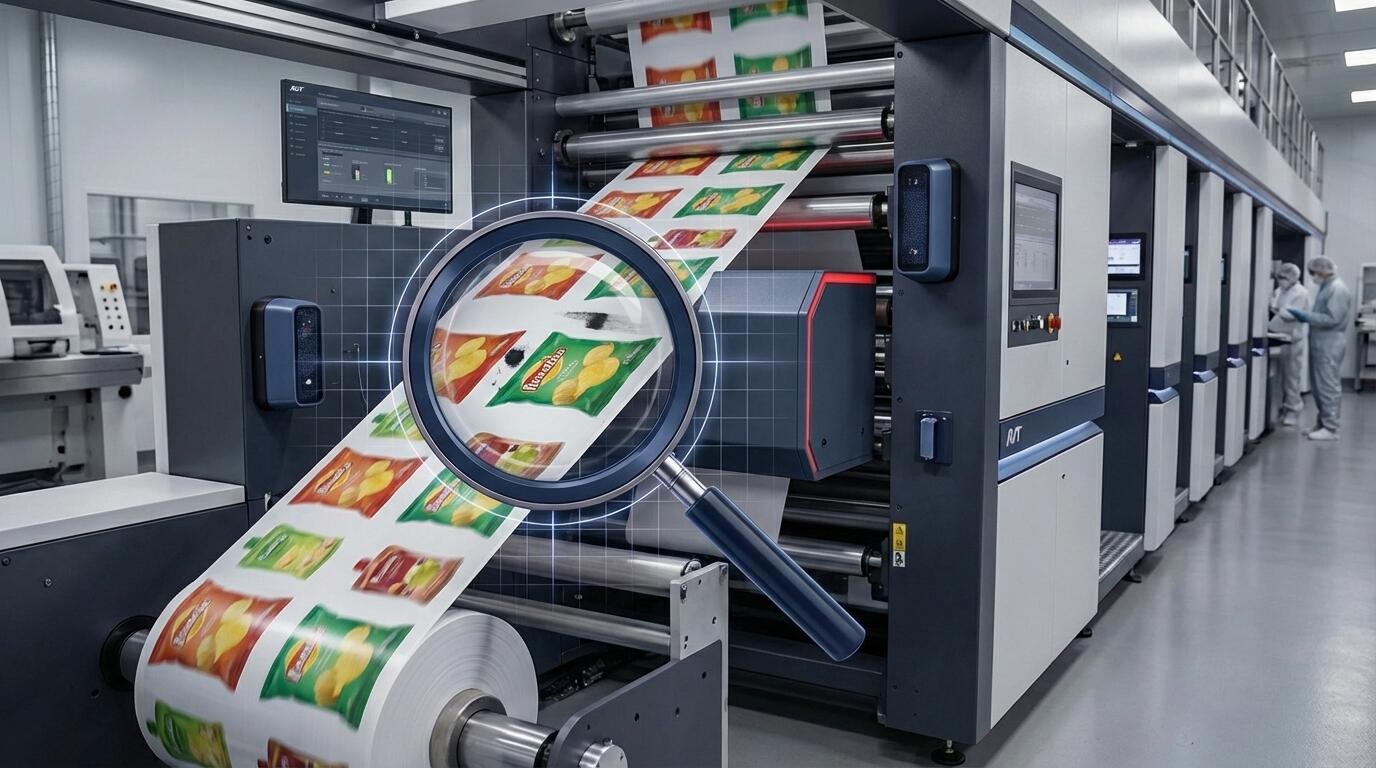
Automated inline inspection systems monitor printed output throughout production, comparing it against an approved reference to detect defects such as missing text, print deviations, and barcode quality issues. Unlike sample-based inspection, 100% inspection enables continuous monitoring of the printed web.
Advanced inspection solutions can also support press control and color management. Depending on the system and press integration, these technologies may provide automatic register correction, spectral color monitoring, and alerts when deviations exceed defined tolerances.
Automation is also being applied earlier in the process, to reduce the human error that often creates these problems in the first place. Automated job setup tools can pull the correct approved reference files and parameters for a given job directly from a central system, reducing the chance that an operator loads an outdated or incorrect version of the artwork. When a defect is identified during production, automated workflow tools can flag or physically mark the affected section of material, so it is removed or reworked before reaching the next stage, rather than depending on someone noticing it later.
Taken together, these capabilities shift quality control from a reactive, after-the-fact activity to a preventive one built into the production line itself. For regulated products like pharmaceuticals, where a printing defect can mean a mislabeled dose, a missing Braille element, or a failed serialization code, catching and correcting issues at the moment they occur, rather than during a later audit or after a complaint, is an increasingly important part of a compliant packaging operation.
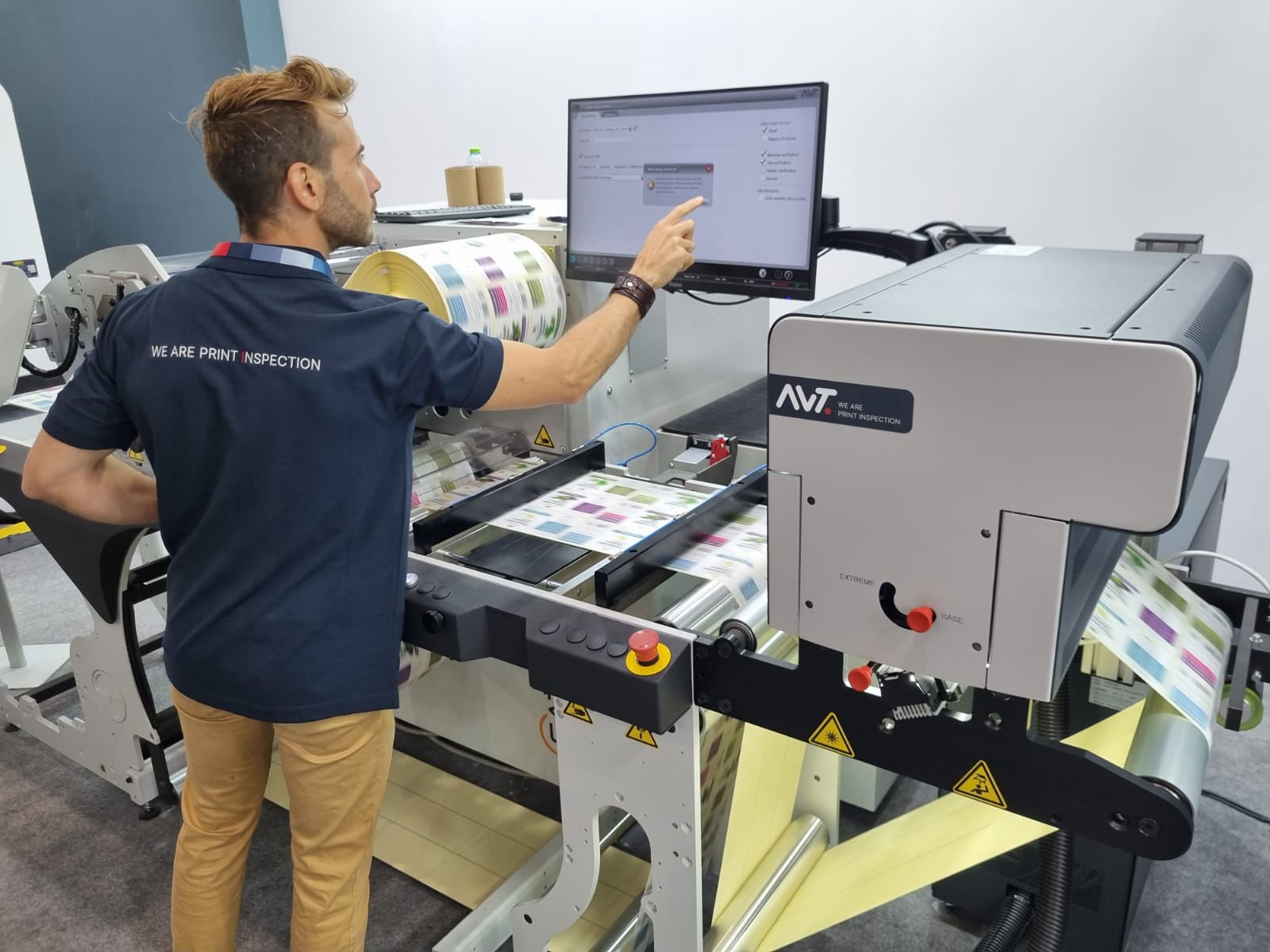
AVT provides advanced print inspection, color measurement, and quality control solutions for label and packaging printers, including pharmaceutical packaging applications. By enabling continuous inspection of printed output, these technologies help detect printing defects, reduce waste, improve process consistency, and support documented quality assurance procedures.
Best practices checklist for compliant pharma packaging printing
- Confirm current regulatory requirements for every target market before finalizing artwork
- Maintain a single, version-controlled source for approved packaging files
- Verify all barcodes and serialization data against GS1 and market-specific standards
- Conduct multilingual proofreading and back-translation review
- Complete a formal regulatory checklist sign-off prior to print release
- Use color management tools to maintain consistency across print runs
- Implement in-line inspection and batch audit procedures
- Retain full documentation and audit trails for every approved packaging run
Supporting pharmaceutical packaging quality through better inspection
Regulatory compliance starts with correctly approved packaging artwork, but maintaining print quality throughout production is equally important. For pharmaceutical packaging printers and converters, effective quality control procedures, combined with automated print inspection and color measurement technologies, help reduce printing errors, maintain consistency, and support compliance with applicable requirements.
Learn more about AVT’s print inspection and quality assurance solutions for pharmaceutical packaging.
This article is intended for general informational purposes only and does not constitute regulatory or legal advice. Requirements from the FDA, EMA, and other authorities are updated periodically. Always confirm current requirements with the relevant regulatory body or a qualified compliance specialist before finalizing packaging artwork.