

Print Inspection has moved beyond quality control, featured in Converter Magazine, September 2026
05 Oct 2026
Guy Yogev, AVT’s VP of Marketing and Product, wrote a feature for the September 2026 issue of Converter Magazine on how print inspection is changing.
The piece traces inspection’s move from a final check before shipping to a live source of production data, covering color measurement, varnish inspection, and what happens to quality information once it leaves the press.
From final check to active workflow
Flexo, gravure, digital and hybrid production all pull inspection into the workflow now, not only at the end of the line.
Converters want to catch defects as they happen, cut make-ready waste, hold color steady, and feed what they learn into the next step of production.
“Converters want to know what is happening during production, why it is happening, and what they can do about it,” Guy said. “The more effectively inspection data can be connected to the rest of the workflow, the greater the value it delivers.”
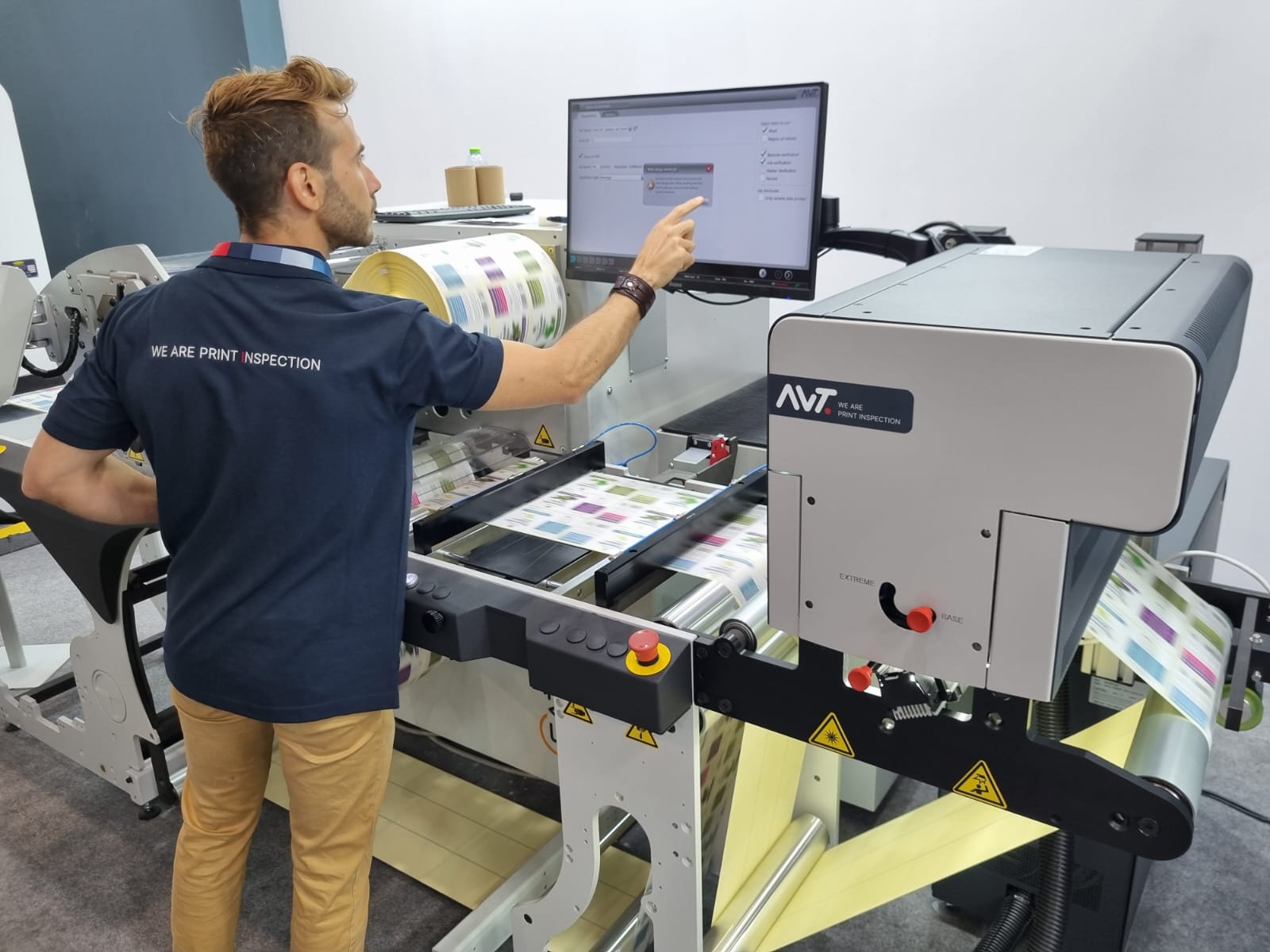
AVT’s Helios, Argus and Apollo systems still cover the fundamentals of 100% inspection: color variation, registration errors, print defects, barcode problems, coating faults. What has changed is how much of that information now feeds forward into decisions, rather than sitting in a report after the job ships.
Taking the guesswork Out of Color
Color stays one of the hardest problems in packaging print, since brand owners expect repeatable results across substrates, presses and production sites. AVT’s SpectraLab XF measures Lab, Delta E, density and dot gain inline, on patches as small as 4 to 6mm, at speeds up to 600 metres a minute.
Rather than waiting on offline spot checks, converters can watch color drift as it happens and correct it mid-run.
The BestMatch module, built with X-Rite, adds live density guidance during make-ready, pointing operators toward target color instead of leaving them to guess. The payoff, in Guy’s words, is shorter make-ready, less substrate wasted, and more consistency from job to job.
Catching what standard cameras miss
Not every defect shows up to a standard camera. Clear coatings and varnishes can hide problems that only surface at finishing, where they cost far more to fix than they would have on press.
AVT’s Varnish Inspection module runs inline, with no UV additives required, and picks up misregistration, partial starvation and coating voids that are otherwise difficult to detect. The earlier a defect turns up, the less value has already gone into a roll before anyone catches the problem.
Read Guy’s full piece in the September 2026 issue of Converter Magazine, page 25.